
Teotihuacan Museum & Murals
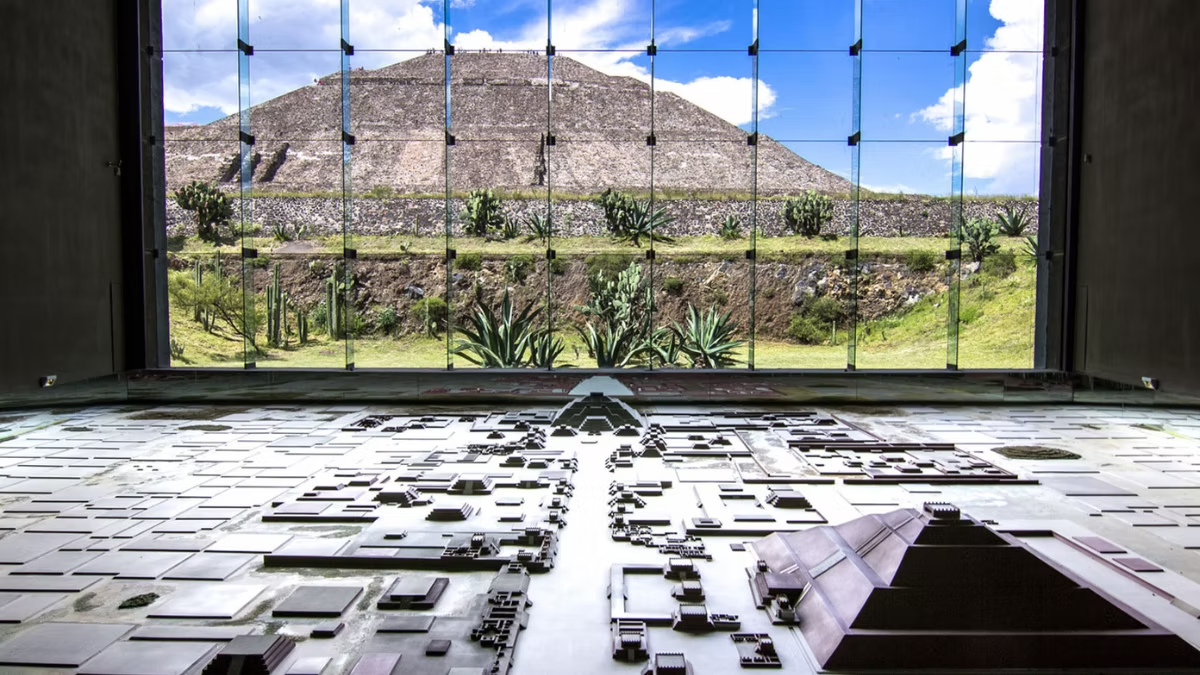
Teotihuacan has one main on-site museum — the Museo de Sitio de Teotihuacan — located near Gate 5. It houses artefacts from excavations across the site, including the golden spheres from the Feathered Serpent tunnel, sacrificial burial offerings, obsidian tools, and ceramic figurines. The most important murals at the site are located in the Tepantitla residential compound on the eastern side of the archaeological zone, housing the famous “Paradise of Tlaloc” painting. Additional murals survive at Tetitla and Atetelco on the western side. All are included in the standard entry ticket.
Most visitors to Teotihuacan focus entirely on the pyramids and leave without seeing the murals or the museum. This is understandable — the pyramids are the overwhelming visual presence of the site — but it means missing the material that most directly reveals who the ancient Teotihuacanos were, how they lived, and what they believed.
The murals at Tepantitla, Tetitla, and Atetelco are the closest thing Teotihuacan has to a written record. They depict gods, rituals, animals, humans at play, offerings, and landscapes with a narrative richness that the pyramids — intentionally austere and monumental — do not attempt. The site museum places these and other objects in a clear interpretive context. Together they complete the picture that the architecture alone cannot provide.
The Museo de Sitio de Teotihuacan
The Museo de Sitio de Teotihuacan is located near Gate 5 of the archaeological zone, adjacent to the La Gruta restaurant. It is a purpose-built site museum displaying artefacts recovered from excavations across the entire archaeological zone. Entry requires the standard site ticket — no additional admission is charged for the museum itself.
The museum is relatively compact — it can be covered thoroughly in 45–60 minutes — but its collections are genuinely significant. The permanent collection is organised chronologically and thematically, covering the city’s origins, its peak period, daily life, religious practice, and collapse.
Key objects in the collection:
The golden spheres from the Feathered Serpent tunnel: Some of the most visually striking objects in the collection — small spheres coated in jarosite to produce a metallic golden appearance, found in the underground tunnel beneath the Temple of Quetzalcóatl. Hundreds were found arranged in precise spatial patterns. Their function remains debated — they may represent seeds, stars, or a cosmological map of the underworld.
Sacrificial burial offerings: Objects associated with the human sacrifice deposits found beneath the Temple of Quetzalcóatl and the Pyramid of the Moon — obsidian projectile points, pyrite mirrors, shell ornaments, and greenstone figures. These give context to the sacrificial practices that Teotihuacan’s architectural programme embedded into its most important structures.
Ceramic figurines and vessels: Teotihuacan produced a distinctive ceramic tradition — flat-faced human figurines, cylindrical tripod vessels, and incense burners decorated with complex iconographic programmes. The museum holds fine examples that represent the city’s artistic production across its occupation period.
Obsidian tools and production evidence: The Teotihuacan Valley had extensive obsidian deposits and the city was one of the ancient world’s major obsidian producers and exporters. The museum’s obsidian collection illustrates the full production sequence from raw material to finished tools and ornaments, and contextualises the obsidian workshop stops included in many tour itineraries.
Scale model of the city: A large-scale architectural model near the museum entrance gives an overview of the full ancient city — including the areas not currently open to visitors — that helps orient the visit to the archaeological zone itself. This is particularly useful to see before rather than after touring the site.
Location: Near Gate 5, adjacent to the Carretera México–Pirámides. Approximately 15 minutes’ walk from the Pyramid of the Sun. Most conveniently visited at the end of a site visit, particularly if you are combining with lunch at La Gruta nearby. For restaurant details, see our restaurants guide.
The Tepantitla Murals — The Paradise of Tlaloc
The Tepantitla residential compound on the eastern side of the archaeological zone contains the most important surviving murals at Teotihuacan — including the famous “Paradise of Tlaloc” or “Tlalocan” painting, which depicts a large central figure (the rain deity or great goddess) surrounded by humans at play, flowering plants, streams, and abundant water. It is one of the most significant surviving artworks from the ancient Americas.
The Tepantitla compound is located on the eastern side of the site, approximately 500 metres east of the Avenue of the Dead and roughly opposite the Pyramid of the Sun. Most visitors pass within 400 metres of it without knowing it is there — it is one of the site’s most consistently overlooked highlights.
The Paradise of Tlaloc mural: The most celebrated image at Tepantitla is the large mural on the inner portico wall, commonly known as the Paradise of Tlaloc or Tlalocan. The central figure — a large deity with elaborate headdress — presides over a scene of extraordinary vibrancy: small human figures run, swim, pick flowers, play games, and sing (indicated by speech scrolls emerging from their mouths) in a landscape of trees, streams, and flowering plants.
Whether this depicts an actual paradise — an afterlife realm of abundance for those who died in water-related deaths, as some researchers have interpreted — or a representation of a living ritual landscape is debated. What is unambiguous is the image’s joy: this is one of the few scenes in ancient Mesoamerican art that clearly depicts human happiness and play rather than ritual, warfare, or sacrifice.
The mural’s central figure was long identified as Tlaloc, the rain god. More recent scholarship has proposed that it may represent the Great Goddess — a female deity who was the principal divinity of Teotihuacan. The identification matters for understanding the religious system of the entire city, but visitors can appreciate the mural’s visual richness regardless of the interpretive question.
What to look for: Stand back to appreciate the full composition first — the central deity, the landscape, and the peripheral figures. Then move closer to examine the individual human figures in the lower register — their postures, gestures, and the objects they carry. The detail in the smaller figures is remarkable.
Condition: The murals are partially preserved — significant sections have deteriorated or been lost. The surviving portions are protected behind glass in some areas. The Tepantitla compound has a site guardian present during opening hours.
Tetitla and Atetelco — The Palace Murals
The western side of the archaeological zone contains two additional mural complexes that are less visited than Tepantitla but equally significant for understanding Teotihuacan’s artistic traditions.
Tetitla: A large residential palace compound on the western perimeter of the site with multiple rooms containing mural paintings in various states of preservation. The most striking surviving images include jaguar figures in procession, owl-themed compositions, and repeated geometric border patterns that frame the figural scenes. The compound’s courtyard arrangement gives a clear sense of elite residential architecture at Teotihuacan.
Atetelco: Located a short walk south of Tetitla, the Atetelco compound contains some of the best-preserved mural paintings at Teotihuacan — particularly in the “White Patio,” where coyote figures with feathered headdresses and net jaguar imagery cover the walls in repetitive processional compositions. The Atetelco murals have been studied extensively and are considered among the finest examples of the distinctive Teotihuacan mural style.
Both compounds are included in the standard site ticket and are open during site hours. They are located approximately 500 metres west of the Avenue of the Dead, near the western site perimeter. Allow 30–45 minutes to visit both.
The Murals Now in Mexico City
Some of the most significant Teotihuacan murals are no longer at the site — they were removed during early 20th-century excavations and are now displayed in Mexico City’s Museo Nacional de Antropología in Chapultepec Park. The museum’s Teotihuacan room contains mural sections that cannot be seen at the archaeological zone, including large fragments from the Techinantitla compound and several from Tepantitla that complement the in-situ paintings.
For visitors with the time, a visit to the Museo Nacional de Antropología before or after Teotihuacan provides extraordinary context for the site. The combination is one of the most complete ways to understand ancient Mesoamerica available in the world.
Planning Your Museum and Mural Visit
Time allocation: – Museo de Sitio: 45–60 minutes – Tepantitla murals: 20–30 minutes – Tetitla and Atetelco: 30–45 minutes combined
The murals and museum are best visited after the main pyramids rather than before — you will appreciate the context they provide more fully once you have experienced the site’s scale and architecture. If you are on a half-day tour that does not include the murals, consider noting Tepantitla’s location for a return self-guided visit — it is the single most rewarding addition to a standard pyramid tour.
What to bring: The mural compounds have limited shade. Apply sunscreen and bring water for the walk between compounds. Some areas may be uneven underfoot. Full packing guidance in our what to wear and bring guide.
For a full breakdown of how to structure your time across the entire site, see our how much time you need guide.
Frequently Asked Questions
Is the Teotihuacan museum included in the entry ticket?
Yes. The Museo de Sitio de Teotihuacan is included in the standard MXN 90 entry ticket. No additional admission is charged for the museum.
Where exactly are the Tepantitla murals?
The Tepantitla compound is on the eastern side of the archaeological zone, approximately 500 metres east of the Avenue of the Dead, roughly level with the Pyramid of the Sun. It is signposted from the main avenue but is easily missed without a map. See our Teotihuacan Pyramids map guide for exact location.
Are the Teotihuacan murals still visible?
Yes — partially. The surviving murals at Tepantitla, Tetitla, and Atetelco are visible during site hours, though sections have deteriorated over time. Some areas are protected behind glass. The most important sections of the Tepantitla Paradise of Tlaloc mural are well preserved and clearly visible.
Do guided tours visit the murals?
Most standard shared group tours do not include the mural compounds — there is insufficient time in a 2.5–3 hour site visit to cover the pyramids and the murals. The VIP tour and private tour formats can incorporate the murals on request. If the murals are a priority, discuss this with the operator when booking.
Is the Tepantitla mural the most important art at Teotihuacan?
It is the most celebrated and most reproduced. The Paradise of Tlaloc mural is the image most associated with Teotihuacan’s artistic tradition in scholarly and popular literature. The Atetelco White Patio murals are considered equally significant artistically and are better preserved in some sections.
Can I photograph the murals?
Personal photography is permitted at the mural compounds. Flash photography should be avoided near the painted surfaces as it can contribute to deterioration over time. Commercial photography requires INAH authorisation.
