
Pyramid of the Sun: Complete Guide
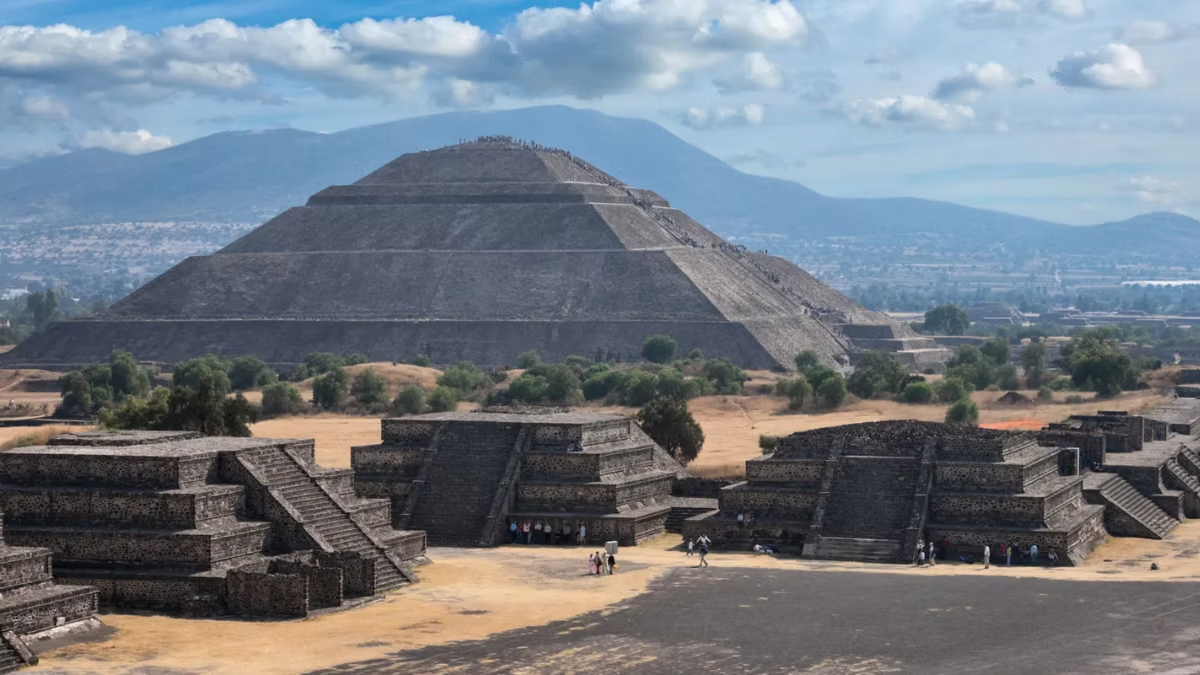
The Pyramid of the Sun is the largest structure at Teotihuacan and one of the largest pyramids in the world by volume — 65 metres tall, 225 metres on each side of its base, and containing an estimated 1.2 million cubic metres of fill. It sits on the eastern side of the Avenue of the Dead and was likely dedicated to a solar or agricultural deity. A natural cave runs beneath the pyramid and is believed to have held ritual significance. Climbing is permitted subject to current access policies — verify on arrival.
Standing at the base of the Pyramid of the Sun is one of those moments that recalibrates your sense of scale. The structure is not just large — it is vast in a way that photographs and statistics do not prepare you for. It rises in five stepped terraces above the eastern side of the Avenue of the Dead, its stone faces catching the morning sun with a quality of light that made the Aztecs, centuries after the city was abandoned, believe that the gods themselves had been born here.
This guide covers everything about the Pyramid of the Sun — its history, its architecture, its religious significance, what lies beneath it, how to approach the climb, and how to get the most from your visit.
Key Facts
| Feature | Measurement |
|---|---|
| Height | 65 metres (213 feet) |
| Base width (each side) | 225 metres (738 feet) |
| Volume | Approx. 1.2 million cubic metres |
| Number of terraces | 5 |
| Construction period | Approx. 100–200 AD |
| Orientation | East-facing; aligned to the setting sun on the equinox |
| UNESCO status | Part of the Teotihuacan World Heritage Site (inscribed 1987) |
History and Construction
The pyramid was built by the people of ancient Teotihuacan, whose identity and language remain unknown to archaeology. Construction is estimated to have occurred between approximately 100 and 200 AD, during the period when Teotihuacan was rapidly expanding into one of the largest cities in the ancient world. The builders moved an estimated 1.2 million cubic metres of earth and rubite rubble — without wheels, iron tools, or draft animals.
The Pyramid of the Sun was constructed in at least two major phases. The first phase produced a structure similar in scale to what we see today. A second phase added the outer facing and the final terraced form. The outermost surface was originally covered in a layer of plaster and painted — traces of red pigment have been found during excavations — giving the pyramid an appearance dramatically different from the bare stone visible today.
At its peak, Teotihuacan was one of the largest cities in the world — home to between 100,000 and 200,000 people. The Pyramid of the Sun stood at the centre of this extraordinary urban environment, visible from every point in the valley and almost certainly functioning as the central visual and religious anchor of the city.
The civilisation that built it collapsed around 550 AD — possibly through internal conflict, possibly through environmental pressures. The city was largely abandoned and the Pyramid of the Sun sat silent for centuries before the Aztecs arrived, named it, and incorporated it into their own religious cosmology.
Architecture and Design
The pyramid rises in five distinct stepped terraces, each slightly smaller than the one below, creating the characteristic stepped profile visible from the Avenue of the Dead and from the summit of the Pyramid of the Moon to the north.
Astronomical alignment: The pyramid’s eastern face is oriented to face the rising sun on the equinox — March 21 and September 21 — when the sun rises directly opposite the pyramid’s axis. This is not coincidental. Teotihuacan’s planners embedded astronomical precision into the entire urban layout, and the Pyramid of the Sun is its most dramatic expression. The spring equinox draws tens of thousands of visitors to the site annually to witness this alignment.
The original shrine: Archaeological excavations have established that a temple or shrine structure originally sat atop the Pyramid of the Sun’s summit — a common feature of Mesoamerican pyramid design. This upper structure was destroyed or dismantled at some point in the city’s history and no longer survives. What visitors climb today is the pyramid’s body without its original summit superstructure.
The staircase: A single grand staircase ascends the western face — the side facing the Avenue of the Dead. The stairs are steep, narrow, and worn after nearly two millennia of use and weathering. The climb requires physical effort; the descent requires care.
The Cave Beneath the Pyramid
Yes. A natural lava tube runs beneath the Pyramid of the Sun, extending approximately 100 metres into the earth with a series of chambers at its end. The cave was discovered in 1971 and is believed to have been a significant sacred space for the ancient Teotihuacanos — possibly representing the underworld or the place of creation. The pyramid may have been built deliberately above the cave to mark and sanctify this pre-existing sacred space.
The cave’s chambers were found to contain offerings — pottery, obsidian, and other ritual objects — suggesting that the space was actively used for ceremonies. The relationship between the cave and the pyramid above it is one of Teotihuacan’s most intriguing unresolved questions: did the builders choose this specific location because of the cave, or was the cave incorporated into the pyramid’s ritual meaning after construction?
The cave is not open to visitors but forms an important part of the interpretive narrative that any good guide provides at the Pyramid of the Sun. Understanding that the pyramid sits above a sacred natural formation dramatically deepens the experience of visiting it. For more on what lies beneath the site’s structures, see our what's inside the Teotihuacan Pyramids guide.
Climbing the Pyramid of the Sun
Climbing access has varied in recent years due to conservation concerns. As of 2025, the Pyramid of the Sun has had restricted access at various points. Verify the current access situation on arrival at the site or with your tour operator before booking. The Pyramid of the Moon currently permits climbing to its upper platforms and offers excellent panoramic views.
When access is permitted, the climb from base to summit takes approximately 15–20 minutes at a steady pace. The stairs are steep — steeper than they appear from the ground — and the altitude (2,300 metres above sea level) means the physical effort is greater than at lower elevations. Take your time, drink water before you start, and rest at the terrace levels if needed.
The view from the top: When summit access is available, the panorama from the Pyramid of the Sun’s peak is extraordinary — the full length of the Avenue of the Dead laid out below, the Pyramid of the Moon to the north, the Ciudadela to the south, and the Teotihuacan Valley extending to the surrounding mountain ranges.
Safety on the stairs: Wear closed-toe shoes with good grip. The stairs are worn and uneven. Descend carefully — facing forward down steep ancient stairs is harder than it looks. Hold the guide chains or ropes where provided. Never run on the pyramid stairways.
Best Time to Visit the Pyramid of the Sun
Time of day: The Pyramid of the Sun faces east, which means it catches the morning light on its main facade — the best conditions for photography and appreciation of the stone’s texture and colour. Arrive at the 8:00 AM site opening to see it in this morning light before the crowds build.
The equinox: If your visit coincides with the spring (March 21) or autumn (September 21) equinox, the astronomical alignment of the pyramid’s axis with the setting sun is visible in the late afternoon. The spring equinox in particular draws enormous crowds — over 100,000 visitors in a single day. If crowds are a concern, avoid this period. If the astronomical event itself is the draw, plan accordingly and arrive very early.
For full seasonal planning guidance, see our best time to visit Teotihuacan guide.
How to Get There
The Pyramid of the Sun is most conveniently reached through Gate 3, which sits near the pyramid’s eastern base. From Gate 1 (the main entrance), the pyramid is approximately a 30–40 minute walk northward along the Avenue of the Dead.
For a full layout of the site with all five gates and key landmarks, see our Teotihuacan Pyramids map guide.
The Pyramid of the Sun vs the Pyramid of the Moon
The Pyramid of the Sun is significantly larger — 65 metres tall versus 43 metres for the Moon — and sits on the eastern side of the Avenue of the Dead. The Pyramid of the Moon is at the northern terminus of the avenue and currently offers better panoramic viewing access. The Moon Pyramid’s plaza in front of it — the Plaza de la Luna — is one of the most atmospheric spaces in the archaeological zone. Full details in our Pyramid of the Moon guide.
The two pyramids are best experienced as a pair — the Sun from Gate 3 level and the Moon from the summit of the Sun (when access permits), and the Sun from the accessible upper platforms of the Moon.
What a Guide Adds at the Pyramid of the Sun
A certified guide at the Pyramid of the Sun brings context that transforms the visit. The key narratives a good guide covers at this structure include the astronomical alignment and what it tells us about Teotihuacan’s cosmological worldview, the cave beneath the pyramid and its role in the city’s ritual geography, the construction methods and scale of the engineering achievement, the original painted appearance of the pyramid and what it would have looked like at the city’s height, and the acoustic phenomenon — standing at specific points around the pyramid’s base and clapping produces an echo that mimics a bird call — a feature that is believed to be intentional rather than coincidental.
For the full range of guided tour options from Mexico City, see our Teotihuacan guided tour guide.
Frequently Asked Questions
How tall is the Pyramid of the Sun?
65 metres (213 feet). It is the third-largest pyramid in the world by volume, behind the Great Pyramid of Cholula (also in Mexico) and the Great Pyramid of Giza.
Is the Pyramid of the Sun older than the Egyptian pyramids?
No. The Egyptian pyramids at Giza were constructed around 2560–2490 BC. The Pyramid of the Sun was built approximately 100–200 AD — roughly 2,600 years later. However, the civilisation that built it is equally mysterious — the builders’ identity and language remain unknown, just as the purpose of many aspects of the Egyptian pyramids is still debated.
Why is it called the Pyramid of the Sun?
The name was given by the Aztecs when they visited the abandoned city. The actual name used by the pyramid’s builders is unknown. Modern archaeology has confirmed a solar orientation in the pyramid’s design — its axis aligns with the setting sun on the equinox — which supports the Aztec interpretation even if the original name was different.
What is inside the Pyramid of the Sun?
The pyramid is solid — it is not a hollow structure with internal chambers in the way that some Egyptian pyramids are. It is composed of layers of earth, rubble, and stone facing. The natural cave beneath it is the primary underground space associated with the structure. For full details, see our what’s inside the Teotihuacan Pyramids guide.
Can children climb the Pyramid of the Sun?
When access is permitted, children can climb with appropriate supervision. Closed-toe shoes with grip are essential. Hold younger children’s hands on the stairs at all times. The descent is more challenging than the ascent — take it slowly. For full family guidance, see our Teotihuacan with Kids guide.
Is the Pyramid of the Sun in Mexico City?
No. The Pyramid of the Sun is located at Teotihuacan, approximately 50 km northeast of Mexico City in the State of Mexico. It is the most popular day trip from Mexico City but is not within the city itself.
