
Is Teotihuacan Safe?
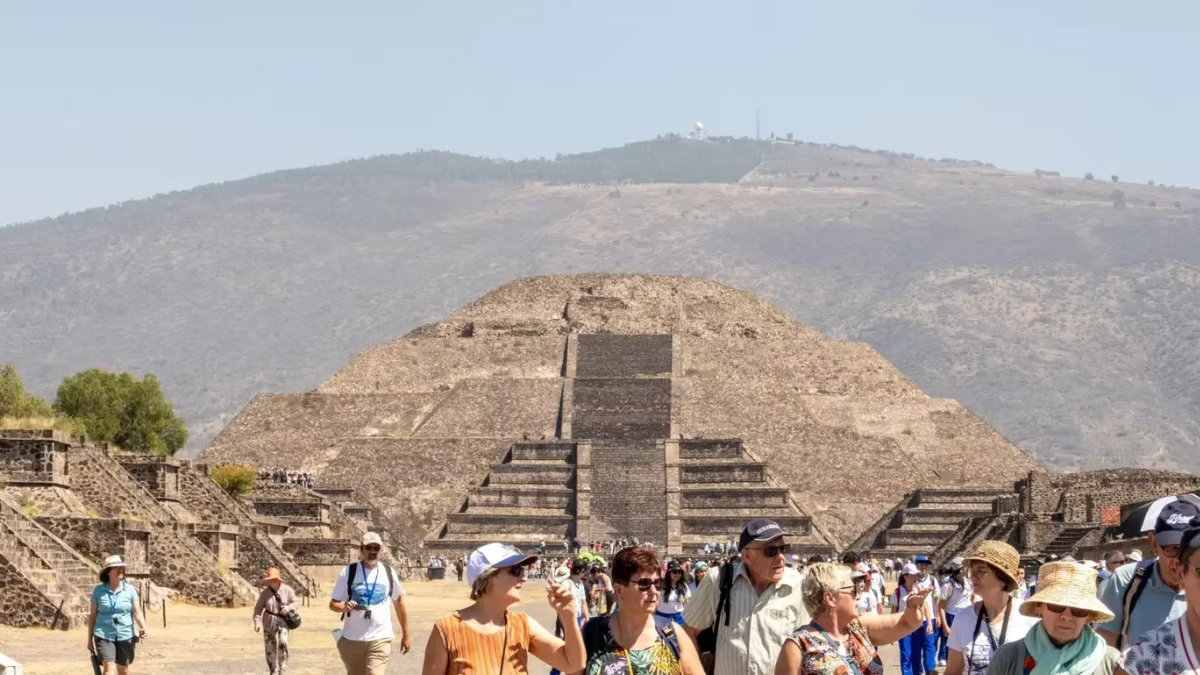
Teotihuacan is generally safe for tourists. The archaeological zone itself is well-managed, staffed by INAH guards throughout opening hours, and has a strong record of visitor safety. The main risks are not violent crime but rather opportunistic scams, aggressive vendor pressure, and transport-related issues on the access roads. Solo travellers, women travelling alone, and families with children all visit regularly without incident. Standard urban travel precautions apply.
Safety is one of the most commonly searched questions about Teotihuacan — and the answer is more reassuring than the question implies. Mexico has a complex safety reputation that does not reflect the reality of visiting its most popular tourist sites. Teotihuacan, as the most visited attraction in Mexico, operates under a level of infrastructure, visibility, and staffing that makes it significantly safer than many other destinations in the country.
This guide gives an honest assessment — the things that are genuinely fine, the things worth being aware of, and the precautions that are actually useful rather than merely reassuring.
Safety at the Archaeological Zone
The Teotihuacan Archaeological Zone is safe. The site is patrolled by INAH security guards throughout opening hours, is well-lit in the accessible areas, and operates under the active oversight of Mexico’s federal cultural heritage institution. Over three million visitors pass through the site annually without serious incident. Violent crime at the archaeological zone itself is extremely rare.
The archaeological zone is a contained, managed environment — fenced perimeters, defined entry and exit points, uniformed staff throughout, and a constant flow of visitors that creates natural safety through numbers. The conditions inside the site are fundamentally different from an isolated rural road or a poorly-lit urban neighbourhood.
What you will encounter: Vendors, crowds on weekends, sun, heat, and uneven terrain. None of these are safety risks in the crime sense — they are practical considerations for a comfortable visit.
What is genuinely rare: Violent crime, robbery, assault. These incidents do occur at tourist sites in Mexico, but Teotihuacan’s staffing levels, visitor volume, and profile as Mexico’s number-one attraction make it significantly less exposed than less-visited sites or urban areas.
The Vendor Situation
The most common negative experience at Teotihuacan for tourists is not crime — it is aggressive or persistent vendor pressure. Understanding this in advance removes most of its impact.
Inside the archaeological zone: Vendors operate at several points along the main route. They sell souvenirs, obsidian figurines, replica artefacts, textiles, and food. Most are legitimate traders, but some use high-pressure techniques: following visitors, claiming special prices, suggesting that free items will be given before requesting payment, or using children to appeal for purchases.
The standard technique: A vendor approaches and offers an item — often an obsidian figurine — appearing to give it as a gift. Once you accept it, they request payment. The item was never free. The resolution is simple: do not accept items from vendors unless you intend to purchase them and have agreed a price in advance.
How to handle it: A firm, polite “no gracias” and continued walking resolves most approaches within seconds. Engaging, making eye contact, or attempting to negotiate something you do not want to buy prolongs the interaction. You do not need to be rude — simply decisive.
The tour recommendation: One reason the VIP tour explicitly advertises “no commercial stops” is that some tour operators route groups through souvenir shops and vendor areas where commission is earned. Reputable tours that avoid these stops deliver a notably less pressured experience.
Scams to Be Aware Of
The “four-wheeler tour” scam: Near Gate 1 and in the parking areas, you may be offered ATV or four-wheeler “tours” by individuals presenting themselves as official staff. These are not official INAH activities — they are private ventures that typically involve a slow drive around the town of San Juan Teotihuacan, stopping at vendor shops, rather than any access to the pyramids or archaeological zone. The price quoted is usually $30 USD or more. Decline these offers.
The “guided tour” approach in the parking area: Some individuals in the parking areas or near the gates present themselves as licensed guides and offer tours at attractive prices. Legitimate licensed guides operate through established tour operators — they do not solicit business in car parks. If you want a guide, book in advance through a reputable operator. See our Teotihuacan guided tour guide for verified options.
Overpriced unofficial “skip-the-line” tickets: If someone near the gate offers to sell you a ticket that will help you skip the queue faster than the standard process, decline. Skip-the-line tickets are purchased online in advance — not from individuals in the queue.
Fake artisanal certificates: Some vendors claim that their obsidian or ceramic items carry official INAH authenticity certificates. INAH does not issue certificates for souvenirs — this is a sales technique, not an official designation.
Transport Safety
Public bus (Terminal del Norte to Gate 1): The Autobuses México–San Juan Teotihuacán service is safe, well-used, and a standard part of Mexican intercity travel. The Terminal Central del Norte is a large, managed bus terminal. The bus itself is straightforward. See our how to get there guide for full directions.
Taxis: Authorised taxis from your hotel or from established taxi ranks are safe for the journey to and from Teotihuacan. Agree the total round-trip fare including waiting time before departure. Avoid hailing taxis on the street near the site.
Driving: The México–Pachuca toll highway is a well-maintained, monitored route. Standard driving precautions apply. The access roads near the site can be congested on busy days — arrive early to avoid the worst traffic.
Guided tours: Organised tours from Mexico City are the safest and most hassle-free transport option. Transport is provided, the operator is accountable, and you are not navigating independently. See our day trips guide for the full range of options.
Safety for Solo Travellers
Solo travellers — including solo women — visit Teotihuacan regularly and safely. The site’s high visitor volume and staffing levels create a naturally safer environment than isolated attractions.
Practical tips for solo visitors: – Book a guided tour rather than visiting entirely independently — the group setting provides natural safety and means you are not navigating transport alone – Keep valuables secure — a crossbody bag that sits against your body rather than a backpack worn behind you is harder to pickpocket – Stay aware of your surroundings in the parking areas and near the main gate approaches — these are the areas with the highest vendor and solicitor density – Tell someone your itinerary if visiting independently
Safety for Families
Teotihuacan is a popular and safe family destination. The main child-specific safety considerations are physical rather than crime-related:
Sun and heat: Children dehydrate and overheat faster than adults. Bring more water than you think you need and apply sunscreen before entering. See our what to wear and bring guide.
Pyramid stairs: The stairways on the pyramids are steep and worn. Hold younger children’s hands at all times on ascents and descents. Closed-toe shoes with grip are essential — sandals are not safe on the pyramid faces.
Terrain: The archaeological zone involves uneven stone surfaces throughout. Young children who are running rather than walking need supervision near raised platform edges and stairway approaches.
For comprehensive family visit guidance, see our Teotihuacan with Kids guide.
Health and Physical Safety
Sun and UV: At 2,300 metres above sea level, UV radiation is approximately 25% more intense than at sea level. The site has almost no shade. Apply high-SPF sunscreen before entering, bring a hat, and wear sunglasses. Heatstroke is a genuine risk for visitors who arrive unprepared.
Altitude: Visitors arriving from sea level may experience mild altitude effects — headaches, slightly faster fatigue, and increased thirst. Stay well hydrated. The effects are generally minor for a single-day visit.
Uneven terrain: Falls on the uneven stone surfaces are the most common physical incident at archaeological sites. Wear appropriate footwear, watch your step on the raised platform edges, and take the pyramid stairs slowly.
Water: Drink from sealed bottles only. Do not drink from taps at the site facilities.
Emergency Information
Site security: INAH security guards are stationed throughout the archaeological zone and at all five entry gates during opening hours. Approach any guard in case of emergency.
Medical: A basic first aid point is available near Gate 1. For serious medical emergencies, the nearest hospital is in Texcoco (approximately 20 km) or in Mexico City (approximately 50 km). Emergency number in Mexico: 911.
Tourist police (Policía Turística): Mexico City’s tourist police patrol major attractions and can assist with complaints, scam reports, and minor incidents. At Teotihuacan specifically, INAH staff are the first point of contact.
Frequently Asked Questions
Is Teotihuacan safe for solo female travellers?
Yes — solo women visit Teotihuacan regularly and safely. The site’s high staffing and visitor volume create a naturally secure environment. Standard precautions apply: keep valuables secure, book transport through reputable operators, and use a guided tour format rather than navigating entirely alone if you are concerned.
Is it safe to take the public bus to Teotihuacan?
Yes. The Autobuses México–San Juan Teotihuacán service from Terminal Central del Norte is a standard intercity bus operation used by Mexican families and tourists daily. The terminal and bus are safe.
Are there pickpockets at Teotihuacan?
Opportunistic theft at tourist sites is possible anywhere in the world. Teotihuacan is not notably high-risk for pickpocketing, but standard precautions are sensible: keep valuables in a front pocket or zipped bag, be aware of your surroundings in crowded areas, and do not leave a bag unattended.
Is it safe to visit Teotihuacan at night?
The standard archaeological zone is not open at night. Noche de Estrellas events are organised by INAH with security in place. Independent visits to the area after dark are not recommended. See our Teotihuacan at Night guide for the organised night event details.
Is the road to Teotihuacan safe?
The México–Pachuca toll highway is a well-monitored federal toll road. The access roads near the site are busy on weekends but standard in terms of safety. The route is used by millions of visitors annually without significant incident.
