
Teotihuacan at Night
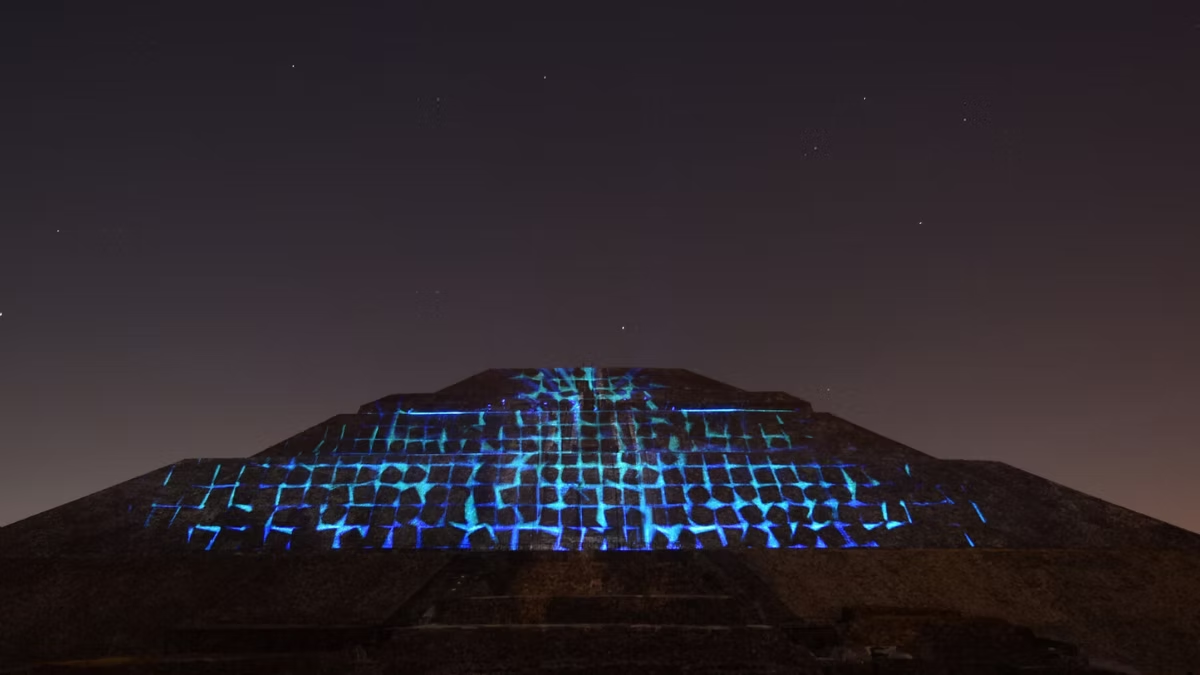
The Teotihuacan Archaeological Zone is not open to the public at night during standard hours — it closes at 5:00 PM daily. However, two distinct night-time experiences are available: the Noche de Estrellas (Night of Stars) — a special INAH-organised stargazing event held on selected nights — and the Teotihuacan Light Show (Noche de Leyendas), a sound and light projection show held after sunset on the site perimeter. Both require separate booking from the standard entry ticket.
Teotihuacan after dark is a different world entirely. The crowds are gone, the heat is gone, and the pyramids stand in a silence that the daytime site — with its constant flow of three million annual visitors — rarely allows. The ancient city at night carries a quality of presence that even the best daytime visit cannot replicate.
Access to that experience is not as straightforward as simply arriving after closing time, but it is possible through two well-established formats — both of which reward the effort significantly.
The Teotihuacan Light Show
The Teotihuacan light show — officially known as Noche de Leyendas (Night of Legends) — is a sound and light projection show held in the evenings along the Avenue of the Dead. Large-scale projections illuminate the pyramid facades and surrounding platforms with imagery depicting the history, mythology, and cosmological symbolism of ancient Teotihuacan. The show runs after sunset and lasts approximately 45 minutes.
The Noche de Leyendas is one of Mexico’s most visually spectacular cultural events. The projections are narrative — tracing the story of the ancient city from its founding through its peak and collapse, using the actual pyramid surfaces as the canvas. The Pyramid of the Sun serves as the primary projection surface, with additional elements covering the flanking platforms along the Avenue of the Dead.
The imagery cycles through Teotihuacan’s cosmological symbolism — the feathered serpent, the rain deity, the astronomical alignments, and the social life of the ancient city — before culminating in a representation of the city at its peak, followed by the fire that consumed its ceremonial centre around 550 AD. Visitors who have completed the daytime tour first will recognise specific structures and iconography and get significantly more from the narrative.
When does it run? The light show is a seasonal programme, typically scheduled Thursday through Sunday evenings during the main tourist season (approximately October through April) and during special periods such as Semana Santa and the Día de los Muertos window in early November. Dates are announced seasonally — check current availability through the booking partners linked on this site.
How to book: The light show requires a separate ticket from the standard daytime entry. Booking in advance is strongly recommended as popular show dates sell out.
Practical logistics: – Gates open approximately 30–45 minutes before show start – Viewing area is the Avenue of the Dead between Gate 1 and the Pyramid of the Sun plaza – The show runs approximately 45 minutes – Photography is permitted throughout — no flash required as projections provide sufficient light – Allow 30–45 minutes for entry before and 30 minutes for exit after — approximately 2 hours total
What to bring: Evening temperatures at 2,300 metres altitude drop significantly after sunset — from a daytime high of 20°C, temperatures can fall to 10–14°C by the time the show ends. Bring a warm jacket and layers. The Avenue of the Dead surface is uneven and poorly lit during the show — footwear with grip is important.
Noche de Estrellas — The Stargazing Event
Noche de Estrellas (Night of Stars) is a special INAH-organised event that opens the Teotihuacan Archaeological Zone after dark on selected evenings for stargazing. The event includes access to the site at night, guided astronomical observations using telescopes, and cultural programming related to Teotihuacan’s astronomical traditions. Dates are limited and announced through INAH’s official channels.
The astronomical significance of Teotihuacan makes it a particularly meaningful venue for stargazing. The city’s entire urban grid was oriented around astronomical alignments — the rising of the Pleiades, the solar equinox alignments, the architectural encoding of the 365-day calendar. Observing the night sky from the Avenue of the Dead at midnight, surrounded by the same celestial orientations the ancient builders encoded into the city’s foundations, is a genuinely extraordinary experience.
When does it run? Noche de Estrellas dates are announced annually through INAH’s official channels (inah.gob.mx) and are typically limited to a handful of evenings per year, often coinciding with significant astronomical events or cultural calendar dates.
How to book: Registration is required through INAH’s official portal. Places are limited and sell out quickly after announcement. The event is typically free or very low cost.
What to expect: Guided stargazing with telescopes provided by INAH and partner institutions, cultural programming on Teotihuacan’s astronomical traditions, and access to portions of the site after dark — typically the Avenue of the Dead and plaza areas.
What to bring: Warmth above everything else. Clear nights at altitude radiate heat away most effectively — temperatures can drop to 8–10°C. Bring a heavy jacket, warm layers, a hat, and a torch for navigating the uneven site surface. Full clothing guidance in our what to wear and bring guide.
Combining Day and Night Visits
The most complete Teotihuacan experience combines a daytime guided tour with an evening light show on the same or consecutive days. The daytime visit provides the interpretive foundation — understanding the Temple of Quetzalcóatl, the pyramids, and the Avenue of the Dead — that makes the light show’s narrative projections fully legible.
For visitors with a single day, a daytime early access tour finishing by early afternoon, combined with the evening light show, delivers the most complete experience in a single outing. For visitors with two days, adding a dawn hot air balloon flight creates an extraordinary three-perspective experience of the same site — from the air at sunrise, on the ground at noon, and by projection at night.
Safety at Night
Both the Noche de Estrellas and Noche de Leyendas events are staffed by INAH security throughout. Independent visits after dark are not possible — the fenced archaeological zone is secured after 5:00 PM. Organised transport to and from evening events is strongly recommended. For general safety guidance, see our is Teotihuacan safe guide.
Frequently Asked Questions
Can you visit Teotihuacan at night independently?
No — the standard archaeological zone closes at 5:00 PM every day. Night access is only available through the Noche de Estrellas stargazing events and the Noche de Leyendas light show, both of which require separate booking.
How long does the Teotihuacan light show last?
Approximately 45 minutes for the show itself, plus 30–45 minutes for entry before and 30 minutes for exit after — approximately 2 hours in total including logistics.
Is the Noche de Estrellas the same as the light show?
No. These are two distinct events. Noche de Estrellas is a limited stargazing event focused on astronomical observation. Noche de Leyendas is a regular-season sound and light projection show. Both require separate booking and offer very different experiences.
Is the light show suitable for children?
Yes — the visual spectacle engages children effectively. The main consideration is warmth — evening temperatures drop significantly and children feel the cold more when standing still. Warm layers and appropriate footwear are essential. For full family guidance, see our Teotihuacan with Kids guide.
Do I need to have visited during the day to appreciate the light show?
It helps significantly. Understanding what the Pyramid of the Sun and the Avenue of the Dead are before the projections illuminate them makes the experience far richer. A prior daytime visit is strongly recommended.
When is the next Teotihuacan light show?
Light show dates are announced seasonally. The show typically runs Thursday–Sunday evenings during the main tourist season (October–April). Check current availability through the booking partners linked on this site for the most up-to-date schedule.
