
Teotihuacan Pyramids Weather
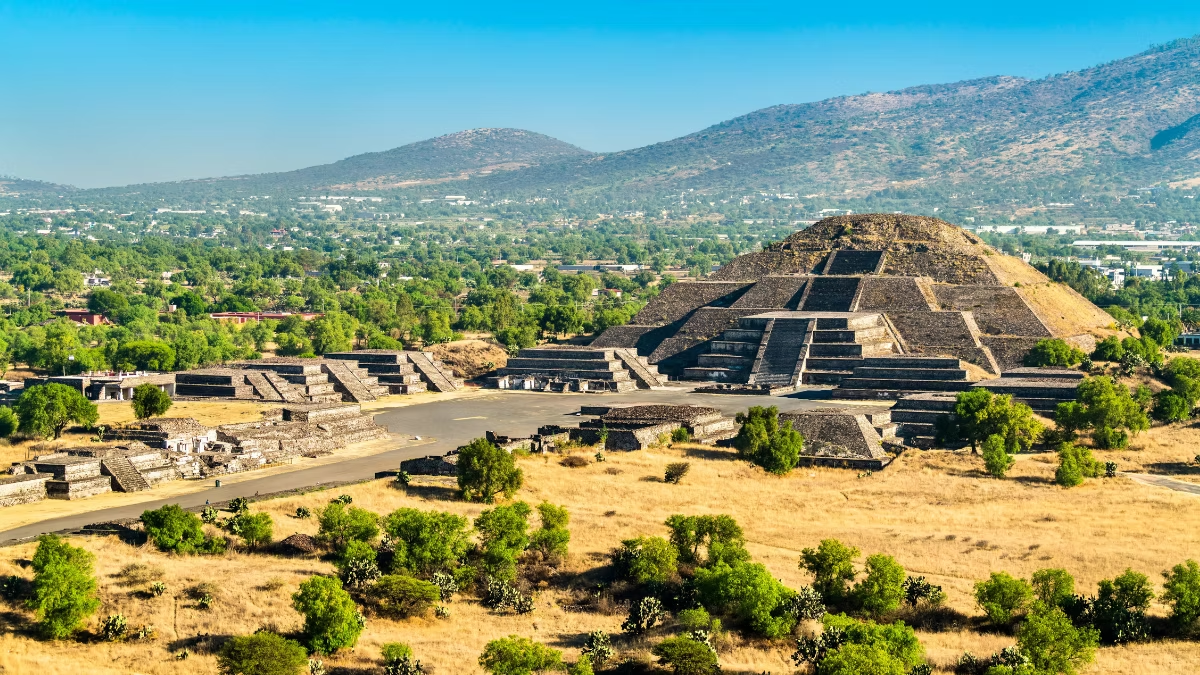
Teotihuacan sits at 2,300 metres above sea level in the central Mexican highlands. It has two distinct seasons: a dry season (October–May) with clear skies and temperatures of 12–28°C, and a rainy season (June–September) with clear mornings and afternoon showers typically arriving between 2:00 and 5:00 PM. The hottest month is May (up to 30°C). The coolest months are December–January (down to 5–8°C overnight). UV radiation is intense year-round at this altitude regardless of cloud cover.
Understanding Teotihuacan’s weather before you visit helps you pack correctly, choose your arrival time, and set realistic expectations for the conditions you will encounter. The site sits at 2,300 metres — high enough that the weather behaves differently from Mexico City, with more intense sun, larger temperature swings between morning and afternoon, and a reliable rainy season pattern that is easy to plan around once you know it.
Monthly Weather Overview
| Month | Avg High | Avg Low | Rainfall | Season |
|---|---|---|---|---|
| January | 20°C / 68°F | 5°C / 41°F | Very low | Dry |
| February | 22°C / 72°F | 6°C / 43°F | Very low | Dry |
| March | 25°C / 77°F | 8°C / 46°F | Low | Dry |
| April | 27°C / 81°F | 10°C / 50°F | Low | Dry |
| May | 28°C / 82°F | 12°C / 54°F | Low | Hot dry |
| June | 25°C / 77°F | 13°C / 55°F | High | Rainy |
| July | 23°C / 73°F | 12°C / 54°F | High | Rainy |
| August | 23°C / 73°F | 12°C / 54°F | High | Rainy |
| September | 22°C / 72°F | 12°C / 54°F | Highest | Rainy |
| October | 23°C / 73°F | 10°C / 50°F | Low | Dry |
| November | 21°C / 70°F | 7°C / 45°F | Very low | Dry |
| December | 19°C / 66°F | 5°C / 41°F | Very low | Dry |
Temperature ranges are approximate for the Teotihuacan Valley at 2,300 metres elevation.
The Dry Season (October–May)
The dry season runs from approximately October through May. Rainfall is minimal, skies are reliably clear, and the site is at its most photogenic. Temperatures vary considerably within this period — December through February is cool and comfortable, while April and May are the warmest months of the year.
The dry season is generally the best time for visiting Teotihuacan from a weather perspective. The absence of afternoon rain means you can stay at the site for the full opening hours without needing to plan around showers. Skies are clear and blue — ideal for photography against the stone pyramid facades.
October and November are the transitional months coming out of the rainy season. The air is fresh and clean after the summer rains, the surrounding landscape is green, daytime temperatures are pleasant at 21–23°C, and crowd levels are moderate. These are among the best overall months to visit. See our best time to visit guide for crowd context.
December through February is the coolest part of the dry season. Daytime temperatures are comfortable at 19–22°C, but mornings can be cold — temperatures drop to 5–8°C overnight and the early morning at the site can feel genuinely chilly before the sun is fully up. A warm jacket for the drive and the first hour at the site is useful. An added benefit: December through January (outside the Christmas holiday window) is among the quietest crowd periods of the year.
March and April bring warming temperatures and continued dry conditions. March 21 — the spring equinox — draws enormous crowds regardless of weather. April is hot by mid-month (24–27°C) but still dry. This period before the rains arrive is popular with visitors who want warm conditions without the afternoon showers of summer.
May is the hottest and driest month. Afternoon temperatures can reach 28–30°C on the open site, which has almost no shade. UV radiation at this altitude is intense. An early morning arrival (at the 8:00 AM opening) is particularly important in May to cover the main structures before the heat peaks. Carry at least 2 litres of water per person.
The Rainy Season (June–September)
The rainy season runs from June through September, with afternoon showers typically arriving between 2:00 and 5:00 PM. Mornings are almost always clear and are excellent for visiting. Temperatures are moderate — 22–25°C in the daytime — and actually cooler than the dry-season peak months of April and May.
The rainy season is more workable than its name suggests. The pattern is reliable: clear, often sunny mornings; cloud building from mid-morning; rain arriving in the afternoon. For visitors who arrive at the 8:00 AM opening and complete their visit by 1:00–2:00 PM, the rain is largely irrelevant.
What the rain is like: Teotihuacan’s rainy season showers are typically short and heavy rather than continuous drizzle. A downpour lasting 30–60 minutes is more common than an all-day grey sky. The rain cools the air significantly when it arrives.
The advantage of the rainy season: Many visitors stay away, meaning weekday crowd levels in June–September are among the lowest of the year. The landscape around the pyramids is at its most vividly green. And the dramatic cloud formations building around the Pyramid of the Sun in the mid-morning produce photographic conditions that simply do not exist in the dry season.
What to bring in the rainy season: A lightweight, packable waterproof jacket or poncho. A thin plastic poncho is entirely sufficient and takes up almost no space. If you are caught in the rain without waterproofing at Teotihuacan, the open site offers very little shelter — the experience is significantly more comfortable with a jacket to hand. Full packing guidance in our what to wear and bring guide.
Lightning: In the event of an active lightning storm, avoid being at the top of the pyramids. Lightning is rare at the site but the exposed height of the upper pyramid platforms is not a safe place during an electrical storm.
UV Radiation — The Year-Round Consideration
The Sun is significantly stronger at Teotihuacan than at sea level. At 2,300 metres elevation, UV radiation is approximately 25% more intense than at sea level. This applies every day of the year, including overcast days in the rainy season when clouds reduce visible light but not UV penetration. The site has almost no shade — sunscreen and a hat are essential regardless of the month or the cloud cover.
UV exposure at high altitude catches many visitors off guard, particularly those visiting in the rainy season when temperatures feel moderate. The damage accumulates through indirect radiation even on cloudy days. Apply SPF 50 or higher sunscreen before entering and reapply after 2 hours. A wide-brimmed hat is the most effective single piece of sun protection you can bring.
Temperature Swings Between Morning and Afternoon
One of Teotihuacan’s distinctive weather characteristics is the significant temperature difference between morning and afternoon, particularly in the dry season:
In December: A 7:00 AM arrival might be 8–10°C. By 1:00 PM the temperature may be 20–22°C — a difference of 12–14 degrees in a few hours. A light jacket that can be tied around your waist as the morning progresses is the practical solution.
In May: A 8:00 AM arrival is 18–20°C — comfortable. By noon it may be 28–30°C in direct sun at altitude. Starting early and finishing before noon becomes a genuine comfort strategy rather than just a crowd-avoidance tip.
In the rainy season: Morning temperatures of 16–18°C can give way to afternoon temperatures of 24–25°C before the rain arrives and drops everything back to 18–20°C. Layers that can be added and removed are more useful than a single outfit calibrated to any one temperature.
Weather by Activity Type
For photography: October–November for post-rainy season clarity; the rainy season (June–September) mornings for dramatic cloud formations; spring equinox (March 21) if dawn light is your priority. Avoid midday in April–May when overhead sun flattens all texture.
For climbing: October–March for comfortable temperatures at altitude; avoid May afternoons and the midday period in any month. The pyramid stairs are slippery when wet — if it has rained recently, descend with extra care.
For balloon flights: The dry season (October–May) has the most reliable conditions. Rainy season balloon flights operate subject to weather clearance and have a slightly higher cancellation rate. See our hot air balloon guide for full weather policy details.
For families with children: October–March — comfortable temperatures, manageable UV if sunscreen is applied, no rain risk. May is the month to be most cautious about with children due to heat. See our Teotihuacan with Kids guide for full guidance.
Frequently Asked Questions
Does it snow at Teotihuacan?
No. At 2,300 metres in central Mexico’s subtropical highland climate, temperatures do not reach freezing during the day. Overnight temperatures in January can approach 3–5°C but snow is essentially unknown at the site.
Is Teotihuacan cold in December and January?
Daytime temperatures in December and January are pleasant — 18–22°C in the afternoon sun. Morning temperatures can be cold (5–8°C before 9:00 AM), particularly on early access tours departing Mexico City at 6:20 AM. Bring a warm jacket for the drive and the first hour at the site; you will likely be able to remove it by mid-morning.
What should I wear if visiting during the rainy season?
Light breathable clothing plus a packable waterproof jacket or poncho. Arrive at 8:00 AM and plan to complete your visit by early afternoon before the showers arrive. See our what to wear and bring guide for a full checklist.
Is it too hot to visit Teotihuacan in summer?
June–September is actually cooler than May, because the rainy season moderates daytime temperatures. The real heat risk is May — the hottest and driest month. In summer, arrive early and finish before noon to avoid both the heat and the afternoon rain.
What is the weather like during the spring equinox?
March 21 falls in the dry season — typically clear skies and temperatures building from cool early morning (8–12°C at dawn) to warm afternoon (22–25°C). For the equinox dawn ceremony, bring warm layers for the pre-sunrise hours.
How does Teotihuacan’s altitude affect the weather experience?
The 2,300-metre elevation means: stronger UV radiation year-round, larger temperature swings between morning and afternoon, faster dehydration than at sea level, and a rainy season that is shorter and more predictable than at lower elevations. It also means that on clear days the sky is a more vivid blue than most visitors are accustomed to — excellent for photography.
