
Teotihuacan Pyramids vs Chichen Itza
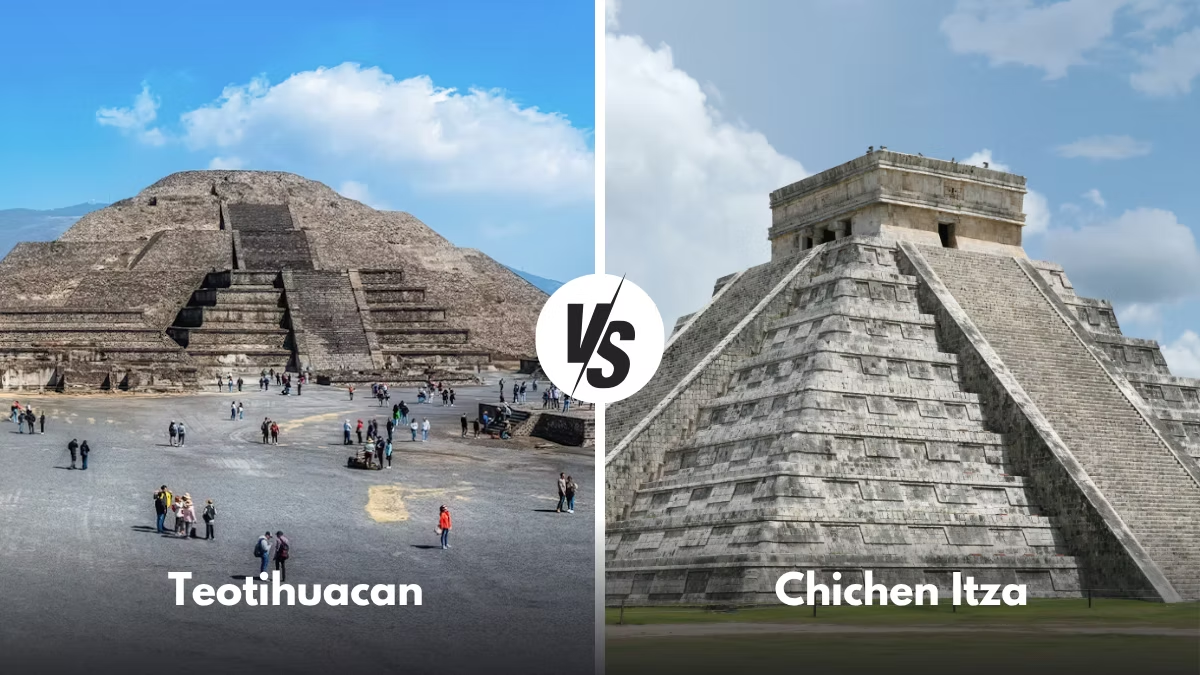
Teotihuacan and Chichen Itza are both extraordinary pre-Columbian sites but they are fundamentally different experiences. Teotihuacan is 50 km from Mexico City, built by an unknown civilisation that predates the Aztecs by centuries, and features the Pyramid of the Sun — one of the largest pyramids in the world. Chichen Itza is in the Yucatán Peninsula near Cancún, was built by the Maya, and features the iconic El Castillo pyramid. If your trip is based in Mexico City, visit Teotihuacan. If your trip is based in Cancún or the Riviera Maya, visit Chichen Itza. If you have time for both, they tell completely different stories and are worth seeing on the same trip.
The comparison between Teotihuacan and Chichen Itza comes up constantly among visitors planning a Mexico trip — and it is a slightly misleading question. The two sites are not really competitors; they are different civilisations, different regions, different eras, and different experiences. Choosing between them is less about which is “better” and more about where you are in Mexico and what kind of experience you are looking for.
This guide lays out the honest comparison across every dimension that matters for a visiting decision.
Side-by-Side Comparison
| Feature | Teotihuacan | Chichen Itza |
|---|---|---|
| Location | 50 km northeast of Mexico City | 180 km from Cancún, Yucatán |
| Civilisation | Unknown (pre-Aztec) | Maya |
| Peak period | 200–550 AD | 600–1200 AD |
| Main pyramid | Pyramid of the Sun (65m) | El Castillo / Temple of Kukulcán (30m) |
| UNESCO status | Yes (1987) | Yes (1988) |
| Entry cost | MXN 90 (~$5 USD) | MXN 600+ (~$30+ USD) |
| Climbing allowed | Pyramid of the Moon (yes); Sun (variable) | No — climbing banned since 2006 |
| Distance from nearest city | 50 km from Mexico City | 180 km from Cancún |
| Typical crowd levels | High on weekends; manageable early | Extremely high year-round |
| Best visit time | 8:00 AM opening | First thing in the morning |
| Site area | 83 sq km total zone | Approximately 6.5 sq km visitor area |
The Civilisations: What You Are Looking At
Teotihuacan was built by a people whose identity remains unknown. They predate the Aztecs by approximately 1,000 years and left no decipherable writing. At its peak, the city was home to between 100,000 and 200,000 people — one of the largest urban centres in the ancient world. It collapsed around 550 AD and was already an ancient ruin when the Aztecs arrived and gave it the name Teotihuacan (“the place where the gods were created”). The mystery of who built it, what language they spoke, and why they left is central to the experience of visiting — you are encountering a civilisation whose identity remains one of archaeology’s great unsolved questions.
Chichen Itza was built by the Maya — one of the ancient world’s most thoroughly documented civilisations. The Maya had a writing system, a sophisticated calendar, named rulers depicted in stone, and historical narratives that archaeologists have been reading for decades. Chichen Itza was a major Maya city that reached its peak between approximately 600 and 1200 AD — roughly 700 years after Teotihuacan’s decline. It shows evidence of significant influence from central Mexico, suggesting that the cultural legacy of Teotihuacan reached the Maya world long after the city’s collapse.
The Pyramids: Scale and Access
Pyramid of the Sun at Teotihuacan: 65 metres tall, one of the largest pyramids in the world by volume. Climbing access has varied in recent years — verify on arrival. When accessible, the summit offers extraordinary views of the entire Teotihuacan Valley.
El Castillo (Temple of Kukulcán) at Chichen Itza: 30 metres tall, the most recognisable pyramid in Mexico. Climbing has been completely banned since 2006 — you can walk around the base and admire the structure, but not ascend it. The prohibition was introduced after a fatal fall and is permanent.
If climbing a pyramid is important to your visit, Teotihuacan is the only option — Chichen Itza does not permit it.
Location and Accessibility
Teotihuacan is a day trip from Mexico City — 50 km, approximately 60–70 minutes by road. It can be reached by guided tour, public bus, or private car and visited in a half day, with the return to Mexico City by early afternoon. For full details, see our day trips from Mexico City guide.
Chichen Itza requires either a base in the Yucatán Peninsula — typically Cancún, Mérida, Playa del Carmen, or Valladolid — or a dedicated travel day if coming from elsewhere. From Cancún, the drive is approximately 2.5–3 hours each way. From Mérida, approximately 2 hours. From Valladolid, approximately 45 minutes. It is not accessible as a day trip from Mexico City without flying.
The location decision is often made for you by your itinerary: if you are spending time in Mexico City, Teotihuacan is the logical choice. If you are based on the Caribbean coast, Chichen Itza is the accessible option.
Book Chichen Itza Tour →Crowds
Both sites attract enormous visitor numbers — Teotihuacan draws over 3 million visitors per year; Chichen Itza draws approximately 4 million. However, the crowd experience is significantly different.
Teotihuacan: Large crowds on weekends and in peak season but manageable with an early arrival. The site is vast enough that even on busy days, arriving at the 8:00 AM opening gives a noticeably quieter experience. Mid-week visits in the dry season can feel surprisingly uncrowded in the early morning.
Chichen Itza: Consistently extremely crowded throughout the year, particularly during the late morning when the large majority of day-trip tours from Cancún and the Riviera Maya arrive simultaneously. The concentration of visitors around El Castillo from approximately 10:00 AM to 2:00 PM is intense. Arriving at opening (8:00 AM) is even more critical at Chichen Itza than at Teotihuacan — the difference between 8:00 AM and 10:00 AM is dramatic.
Cost
Teotihuacan: MXN 90 (~$5 USD) gate price. One of the most affordable entry fees for any major world heritage site.
Chichen Itza: Significantly more expensive — the combined state and federal admission typically runs MXN 600+ (~$30+ USD) for international visitors, plus a separate fee for parking.
What You Experience at Each
At Teotihuacan: You walk one of the ancient world’s great urban axes — the Avenue of the Dead — between some of the largest pyramids ever built, and grapple with the mystery of a civilisation that achieved all of this and then vanished without leaving us their name. The scale is overwhelming; the mystery is the defining emotional note.
At Chichen Itza: You encounter a precisely documented Maya city at its most architecturally sophisticated — El Castillo, the Ball Court, the Temple of the Warriors, the Sacred Cenote. The Maya are not mysterious in the way that Teotihuacan’s builders are; you know their calendar, their writing system, their mythology. The experience is one of encountering a well-documented civilisation at the height of its powers.
Which Should You Visit?
Visit Teotihuacan if: – You are based in or visiting Mexico City – You want to climb a pyramid – The mystery of an unknown civilisation appeals to you more than a well-documented one – You are interested in one of the largest and most ambitious pre-Columbian urban environments ever built – Budget is a consideration
Visit Chichen Itza if: – You are based in Cancún, the Riviera Maya, or Mérida – You want the iconic El Castillo image — one of the most photographed structures in the world – You are interested in Maya civilisation specifically – You want a site with more documented historical narrative
Visit both if: – You have time and are travelling across multiple regions of Mexico – You want to understand the full scope of pre-Columbian Mesoamerica — these two sites represent different civilisations, different regions, and different eras and are complementary rather than interchangeable
Frequently Asked Questions
Which is bigger — Teotihuacan or Chichen Itza?
Teotihuacan is significantly larger. The total archaeological zone covers 83 square kilometres. The visitor area is also larger — the Avenue of the Dead alone stretches 2.4 kilometres. Chichen Itza’s visitor area covers approximately 6.5 square kilometres. The Pyramid of the Sun at Teotihuacan (65 metres) is also more than twice the height of El Castillo at Chichen Itza (30 metres).
Which is older — Teotihuacan or Chichen Itza?
Teotihuacan is significantly older. The city reached its peak between approximately 200 and 550 AD. Chichen Itza reached its peak between approximately 600 and 1200 AD — roughly 700 years after Teotihuacan’s decline.
Can you combine Teotihuacan and Chichen Itza in one trip?
Yes — Mexico City and the Yucatán are natural complements on a longer Mexico itinerary. Flights between Mexico City and Cancún or Mérida are frequent and short (approximately 2 hours). Many visitors spend 3–5 days in Mexico City (including a Teotihuacan day trip) before flying to the Yucatán for the Riviera Maya and Chichen Itza.
Is Teotihuacan or Chichen Itza more impressive?
This is entirely subjective. Teotihuacan is more impressive in terms of scale and physical impact — the Pyramid of the Sun and the Avenue of the Dead together represent a more overwhelming architectural statement than anything at Chichen Itza. Chichen Itza is more impressive in terms of documented historical richness — you know far more about what you are looking at. Most visitors who have seen both rate them as genuinely different rather than ranking one above the other.
Which has better facilities for tourists?
Chichen Itza has more developed tourist infrastructure near the site — hotels, restaurants, and visitor services are more concentrated and developed. Teotihuacan has excellent facilities near the gates but the surrounding area is less developed for tourism.
