
Is Teotihuacan Worth It?
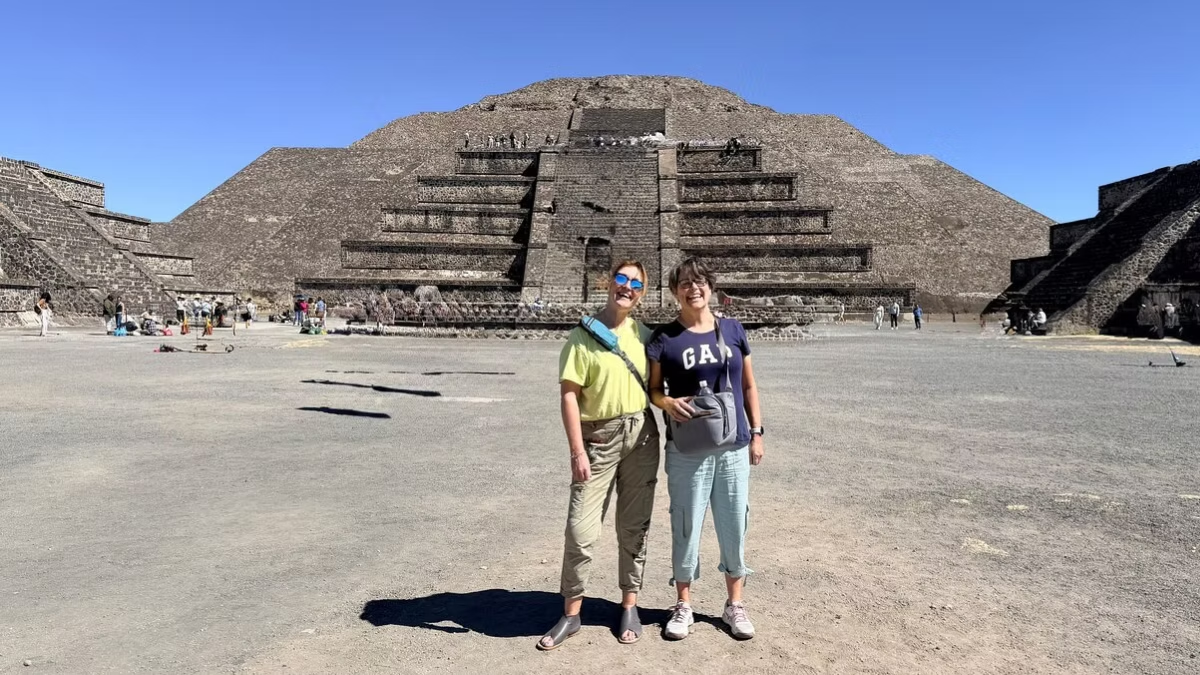
Yes — Teotihuacan is worth visiting for almost every type of traveller who comes to Mexico City. It is one of the largest and most significant pre-Columbian sites in the world, located less than an hour from central Mexico City, and accessible at a gate price of MXN 90. The question is not really whether to go, but how to structure the visit to get the most from it — the difference between a rushed two-hour walk and a properly planned half-day with a guide is the difference between an impressive photo opportunity and one of the most memorable experiences available in Mexico.
“Is it worth it?” is actually the right question to ask about Teotihuacan — not because the answer might be no, but because it frames the real decision correctly: not whether to visit, but how. A poorly planned visit to Teotihuacan can leave a visitor feeling that they walked a long way in the sun to look at old stone. A well-planned visit can deliver one of the most profound encounters with ancient human achievement available anywhere on earth.
This guide gives an honest assessment for different types of travellers, along with what makes the difference between a good visit and an exceptional one.
The Case For Visiting
It is one of the largest and most significant ancient sites in the world. At its peak, Teotihuacan was home to between 100,000 and 200,000 people — one of the five or six largest cities in the ancient world, larger than contemporary Rome by some estimates. The Pyramid of the Sun is one of the largest pyramids ever built, anywhere on earth. The Avenue of the Dead is 2.4 kilometres of ancient urban planning that still communicates its ambition and scale two millennia after it was designed. These are not modest claims — Teotihuacan genuinely belongs in the conversation about the most significant archaeological sites on the planet.
It is extraordinarily accessible from Mexico City. Fifty kilometres and under 70 minutes. No flight required, no multi-day journey, no significant logistical complexity. For anyone spending time in Mexico City, the question of whether Teotihuacan is “worth it” is almost moot given the proximity.
It is affordable. MXN 90 — approximately $5 USD — is one of the lowest entry prices for a UNESCO World Heritage Site of this significance anywhere in the world. A guided tour adds $35–120 USD depending on format, which remains genuinely good value for a full-day experience at a world-class archaeological site.
The mystery adds a dimension that few sites can match. The people who built Teotihuacan left no decipherable writing, no named rulers, and no account of their own history. Who they were, what language they spoke, and why they left remain unknown. Standing at the base of the Pyramid of the Sun knowing that even the builders’ identity is a mystery gives the site a quality of genuine encounter with the unknown that most tourist destinations cannot offer.
Book This TourWhat Makes the Difference Between a Good and Great Visit
The single most important variable in the Teotihuacan experience is whether you visit with or without a guide.
With a guide: the astronomical alignments become legible, the mural iconography at Tepantitla makes sense, the sacrificial deposits beneath the pyramids acquire context, the mystery of the collapse becomes a genuine intellectual puzzle rather than an abstract historical fact. The ancient city becomes a story you are inside.
Without a guide: you see impressive old stone at impressive scale. The pyramids are still visually overwhelming. The Avenue of the Dead is still a remarkable space. But the richness — the layers of meaning, the unresolved questions, the detail — remains largely inaccessible without someone to unlock it.
The second most important variable is arrival time. The first 90 minutes after the 8:00 AM opening deliver a completely different experience from a mid-morning arrival — cooler, quieter, better lit, and with the structures largely to yourself before the main wave of tour groups arrives from Mexico City.
The third is time allocation. A two-hour visit covers the headlines but misses the murals, the Ciudadela, the Temple of Quetzalcóatl, and the unhurried appreciation that large-scale ancient architecture rewards. Three to five hours is the right range.
Is It Worth It for Different Types of Travellers?
History and archaeology enthusiasts: Unequivocally yes. Teotihuacan is one of the great unsolved puzzles of ancient history and an extraordinary physical record of a civilisation at the peak of its powers. The ongoing excavations — the tunnel beneath the Temple of Quetzalcóatl, the burial chambers beneath the Pyramid of the Moon, the broader underground network — mean the story continues to develop. A VIP tour or private tour with a certified archaeologist guide delivers the highest-quality experience.
First-time visitors to Mexico City: Yes — strongly. Teotihuacan is Mexico’s most visited attraction for good reason. If you are spending 3–5 days in Mexico City and visiting only one thing outside the city, this is it. Book a guided tour or the early access tour and arrive early.
Families with children: Yes — with appropriate planning. The physical scale of the site engages children in a way that many cultural experiences do not. Children aged 5 and above consistently rate the experience highly, particularly when a guide frames the visit as a story rather than a history lesson. Entry is free for children under 13. See our Teotihuacan with Kids guide for full family planning guidance.
Photography enthusiasts: Yes — particularly with an early morning visit or a hot air balloon flight. The Pyramid of the Sun in morning light, the aerial view at sunrise from the balloon, and the equinox alignment in late March are among the most photographically compelling subjects available in Mexico.
Visitors with limited time: Yes — but plan it properly. A half-day is sufficient for a meaningful visit. The early access tour returns to Mexico City by 1:00–2:00 PM, leaving the afternoon free. A self-guided visit from 8:00–11:30 AM achieves the same.
Visitors who have already been: Yes — particularly if your previous visit was a rushed group tour without a guide, or if you did not visit the murals, the Ciudadela, or the site museum. A private tour with a focus on the areas you missed delivers a completely different experience from a standard revisit.
Budget travellers: The gate ticket is MXN 90 — approximately $5 USD — and the public bus from Mexico City costs around $7 USD round trip. A total budget of $15–20 USD covers the complete independent visit. Few world-class heritage sites are this affordable.
Honest Caveats
The heat and sun exposure are real. Teotihuacan in May or in the middle of a hot day is physically demanding. The site has almost no shade, the altitude intensifies UV exposure, and 4–6 km of walking over uneven stone in 28–30°C temperatures is hard work. The solution — arriving early, bringing water, wearing sunscreen and a hat — is simple, but the caveat is worth naming. See our what to wear and bring guide.
The vendor pressure is real. The volume and persistence of souvenir vendors at Teotihuacan is among the highest at any Mexican tourist site. A firm “no gracias” and not engaging resolves most interactions, but if you are sensitive to this kind of persistent commercial approach, it can diminish the experience. The VIP tour format is specifically designed to avoid all vendor stops.
Without preparation, the site is less legible than it deserves. Teotihuacan without context — without understanding that the Avenue of the Dead’s orientation encodes astronomical alignments, that the pyramids were built above sacred caves, that the builders’ identity remains unknown — is a visually impressive site that does not fully explain itself. The preparation is minimal (this guide is most of it) but it matters.
The Bottom Line
Teotihuacan is worth visiting. The debate is about how to visit, not whether to. Book a guide, arrive early, bring water and sunscreen, and allow at least 3 hours. The difference between this approach and arriving at noon without a guide on a busy Saturday is the difference between an experience you will be thinking about years later and one you will remember mainly for the heat.
Frequently Asked Questions
Is Teotihuacan overrated?
The common version of this criticism usually comes from visitors who arrived in the middle of a hot day without preparation, without a guide, and after having seen photographs that made the site look more intimate than it is. Teotihuacan is not overrated — but it is under-explained for independent visitors who arrive without context. A good guide or prior research resolves this completely.
How does Teotihuacan compare to other sites in Mexico?
Teotihuacan is larger and more physically imposing than most Mexican archaeological sites. Chichen Itza has more developed tourist infrastructure and the iconic El Castillo image. Palenque in Chiapas has more intimate, jungle-enclosed architecture. Monte Albán in Oaxaca is similarly mysterious. Teotihuacan stands apart for sheer scale — there is nothing else in Mexico that prepares you for the size of the Pyramid of the Sun or the sweep of the Avenue of the Dead.
Is Teotihuacan worth visiting if you have already been to Egypt?
Yes — the experiences are genuinely different. The Egyptian pyramids at Giza are approximately 2,600 years older than Teotihuacan and built by a different culture. Teotihuacan’s mystery (the builders are unknown) is different from the Egyptian pyramids (the pharaohs are named and documented). The Valley of the Moon’s sacrificial deposits, the astronomical alignments, and the ongoing excavations give Teotihuacan a quality of living discovery that the thoroughly excavated Giza plateau does not currently offer.
Is one day enough for Teotihuacan?
Yes — one full day is more than sufficient. Most visitors complete a thorough visit including the murals and museum in 4–5 hours. The early access tour returns to Mexico City by early afternoon.
