
Teotihuacan vs Tulum
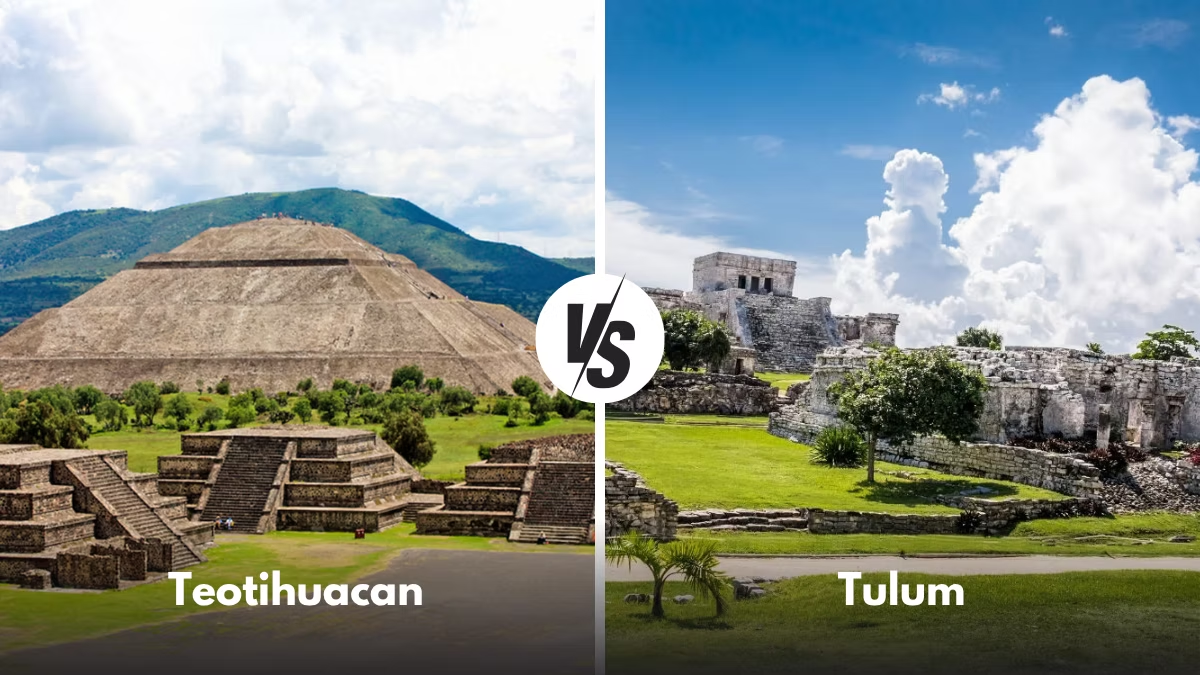
Teotihuacan and Tulum are both significant pre-Columbian sites but offer completely different experiences. Teotihuacan is one of the largest ancient cities ever built — inland, highland, and overwhelming in scale. Tulum is a small but visually striking Maya coastal site with clifftop pyramid views over the Caribbean. If you are based in Mexico City, visit Teotihuacan. If you are based in the Riviera Maya, Tulum is nearby and worth a morning. If you are choosing between them as your only Mexican archaeological experience, Teotihuacan is the more significant and more overwhelming site.
This is a question that usually comes from travellers planning a single Mexico trip who have limited time for archaeological sites and want to make the right choice. The honest answer is that Teotihuacan and Tulum are not really direct competitors — they are radically different sites in terms of scale, civilisation, era, and setting. But if you can only visit one, the comparison matters, and this guide makes it properly.
Side-by-Side Comparison
| Feature | Teotihuacan | Tulum |
|---|---|---|
| Location | 50 km from Mexico City, highland valley | Riviera Maya coastline, Quintana Roo |
| Civilisation | Unknown (pre-Aztec) | Maya (Postclassic period) |
| Peak period | 200–550 AD | 1200–1521 AD |
| Scale | Enormous — 83 sq km total zone | Small — approx. 60 structures |
| Setting | Inland highland plateau at 2,300m | Clifftop above Caribbean Sea |
| Entry cost | MXN 90 (~$5 USD) | MXN 80 (~$4 USD) + separate beach access |
| Climbing | Pyramid of Moon (yes); Sun (variable) | No climbing permitted |
| Visit duration | 3–5 hours for thorough visit | 1.5–2.5 hours is sufficient |
| UNESCO status | Yes (1987) | No |
| Crowd management | Manageable with early arrival | Extremely crowded, particularly 10 AM–2 PM |
| Nearest beach | None | On-site (via cliff access) |
The Civilisations
Teotihuacan was built by a people whose identity, language, and history remain unknown. It predates Tulum by approximately 700 years and was one of the most powerful and influential urban centres in the ancient world. For full historical context, see our History & Civilization of Teotihuacan guide.
Tulum was a Maya Postclassic trading port — one of the last major Maya sites to be inhabited, and still occupied when the Spanish arrived in the early 16th century. It was a walled city on the Caribbean coast, used as a port and trading centre rather than a ceremonial or political capital in the way that earlier Maya sites were. Its relatively small size and late date mean it lacks the architectural grandeur of earlier Maya sites like Chichen Itza, Palenque, or Uxmal — but its clifftop setting above the turquoise Caribbean gives it a visual drama that no other Mexican archaeological site can match.
Scale and Archaeological Significance
This is where the two sites are most different.
Teotihuacan is one of the largest and most significant archaeological sites in the western hemisphere. The Pyramid of the Sun alone contains an estimated 1.2 million cubic metres of fill material. The Avenue of the Dead stretches 2.4 kilometres. The total archaeological zone covers 83 square kilometres. It is a UNESCO World Heritage Site with ongoing major excavations still producing significant discoveries. In terms of archaeological significance, it ranks among the top twenty most important ancient sites on earth.
Tulum is a small, well-preserved Maya site with approximately 60 structures, most of them relatively modest in scale. The largest structure — the Castillo — is about 12 metres tall. Tulum was never a major political or ceremonial centre — it was a trading post. Its archaeological significance is real but limited compared to Teotihuacan, Chichen Itza, or the great Maya centres of the Classic period.
The comparison is, on archaeological terms, not particularly close. Teotihuacan is the more significant site by a substantial margin.
Setting and Experience
This is where Tulum holds its own most strongly — and for many visitors, the setting is the primary appeal.
Teotihuacan’s setting is inland, highland, and austere — a broad dry valley surrounded by distant mountains, dominated by the stepped profiles of the pyramids against a vast sky. It is imposing, ancient, and serious. The experience is intellectual and physical.
Tulum’s setting is coastal and dramatic. The site sits on a clifftop with the turquoise Caribbean visible beyond and below. The Castillo pyramid with the sea behind it is one of the most photographed images in Mexico. After the site visit, a staircase leads down to a small beach cove directly below the ruins. The experience is visual, warm, and — if the tide and crowds cooperate — genuinely beautiful.
If you are travelling primarily for visual beauty and beach access rather than archaeological depth, Tulum offers something Teotihuacan does not.
Book Tulum Tour →Crowds
Both sites are heavily visited, but the crowd experience is different.
Teotihuacan: Over 3 million visitors per year, with weekends significantly busier than weekdays. The site is large enough that an early arrival (8:00 AM opening) gives a manageable and sometimes quiet experience even in peak season. See our best time to visit guide for full crowd management strategy.
Tulum: Also heavily visited, with the additional challenge of a much smaller site area. The ruins themselves cover a compact area — meaning a site that feels manageable at 8:00 AM becomes genuinely congested by 10:00 AM when the bulk of day-trippers from Playa del Carmen, Cancún, and the Tulum hotel zone arrive simultaneously. The ruins share the location with a beach area that is separately managed and accessed, which can add to logistical complexity.
Location and Accessibility
Teotihuacan is a day trip from Mexico City — a 60–70 minute drive or public bus journey from the capital. No flight required; entirely accessible from the most common base in central Mexico.
Tulum is accessible from the Riviera Maya — approximately 2 hours from Cancún airport, 1.5 hours from Playa del Carmen, and 30–40 minutes from Tulum town. If you are based anywhere on the Caribbean coast of the Yucatán Peninsula, Tulum is easily reached. From Mexico City, it requires a flight.
The location decision, as with the Teotihuacan vs Chichen Itza comparison, is largely made for you by your base: Mexico City visitors go to Teotihuacan; Riviera Maya visitors can go to Tulum.
Can You Visit Both?
Yes — Mexico City and the Yucatán are natural complements on a longer Mexico itinerary. Many visitors spend several days in Mexico City (including Teotihuacan), then fly to Cancún for the Riviera Maya, visiting Tulum and possibly Chichen Itza during that leg. Flights between the two cities are short and frequent.
If you are specifically choosing between the two as your only Mexican ruins experience, Teotihuacan is the more significant and the more overwhelming site. But Tulum offers a specific combination — beautiful Maya ruins above a Caribbean beach — that Teotihuacan does not and cannot replicate. They are genuinely different kinds of experiences.
Frequently Asked Questions
Is Teotihuacan better than Tulum?
On archaeological significance and scale, yes — substantially. Teotihuacan is one of the most important ancient sites in the world; Tulum is a small, well-preserved but modest trading port. On visual beauty and coastal setting, Tulum’s clifftop location above the Caribbean is unique and cannot be compared. The right question is what kind of experience you are looking for.
Which is easier to visit in a day?
Both are manageable as day trips. Tulum requires less time at the site (1.5–2.5 hours is sufficient) but may involve a longer drive from your base depending on where you are staying. Teotihuacan takes 3–5 hours for a thorough visit but is very close to Mexico City. For Teotihuacan day trip logistics, see our day trips from Mexico City guide.
Are the pyramids at Tulum the same as at Teotihuacan?
No — they are Maya pyramids from approximately 700 years later, built by a different civilisation, in a different region, and at a much smaller scale. The Teotihuacan pyramids are pre-Maya, built by an unknown civilisation, and significantly larger. The Castillo at Tulum is approximately 12 metres tall; the Pyramid of the Sun at Teotihuacan is 65 metres.
Which has better photo opportunities?
Tulum’s clifftop setting with the Caribbean behind the Castillo pyramid is one of the most photogenic archaeological scenes in Mexico. Teotihuacan offers more scale and variety — the aerial view from a hot air balloon at sunrise over the pyramids is one of the great photographic experiences in Mexico. Both are extraordinary subjects for different reasons.
Is Tulum worth visiting if you have already seen Teotihuacan?
Yes — for the coastal setting and the beach access, which are unique to Tulum among major Mexican archaeological sites. The archaeological experience is less rich than Teotihuacan, but the visual combination of Maya ruins and turquoise Caribbean is genuinely special and not replicated elsewhere.
